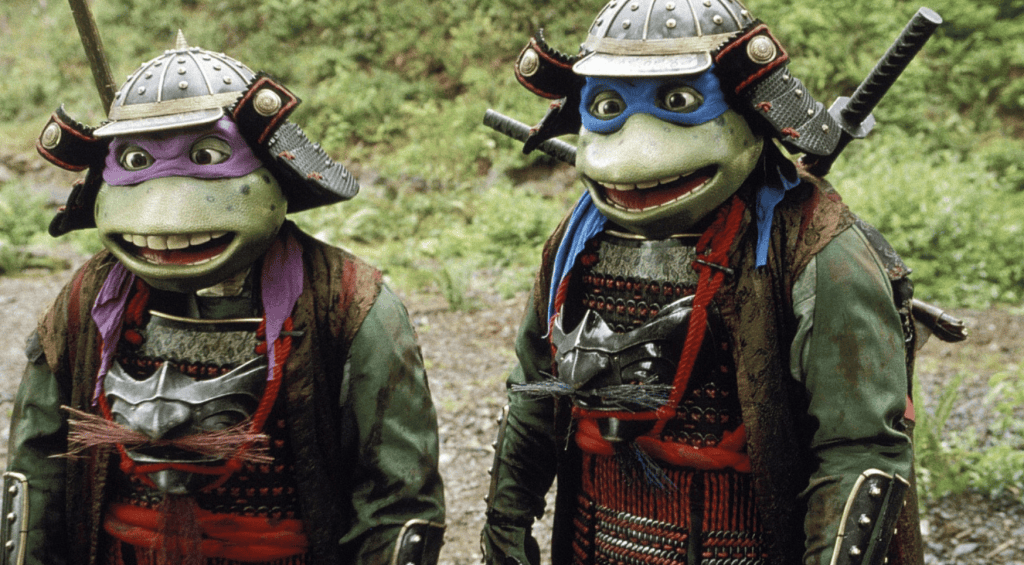
There are many versions of the Teenage Mutant Ninja Turtles, with the 90s live action movie trilogy being one of the fan-favorites. The first is darker, more grounded, and adapts the original Mirage comic book series quite well while using elements of the 1987 animated series. The second installment, Teenage Mutant Ninja Turtles II: The Secret of the Ooze, was brighter, more upbeat, and embraced the animated series more. Then there’s the third film, which did more of its own thing and gets trashed on by fans quite often.
Teenage Mutant Ninja Turtles III took the Turtles on a time-traveling adventure to feudal Japan where they battle a daimyo, European arms dealers, and rescue villagers. People often look down on this sequel, complaining that it looks and feels cheaper than its predecessors, that the lack of villains from the source material hurt it, that the change of setting away from the gritty New York City streets wasn’t what they wanted, and that the time travel plot was weak.
I grew up enjoying all three movies, and always knew in my mind that the third one was the weakest, but never truly understood the hate. I recently rewatched the trilogy back to back, and found myself having a lot of fun with all of them, including TMNT III. It was much more entertaining than what people let on.
First off, using the mysterious magic scepter to trade places with people in another time and place was a fun and unique idea. Every iteration of Teenage Mutant Ninja Turtles adds its own elements to the franchise, and this was unique to Turtles media at the time. Time travel and the scepter would both go on to be a reoccurring element in TMNT media after this. Plus, the cartoon was a massive success, so why not use a fun, cartoony plot for the movie?
I’ll also say it; Teenage Mutant Ninja Turtles III has the best martial arts action of the whole trilogy. The Turtles pull off impressive flips, spins, kicks, and other moves throughout the whole movie. It’s elevated by the intense sword play and action on horseback. They’re able to do this because of the cheaper, thinner suits, but they took advantage of it and it paid off.
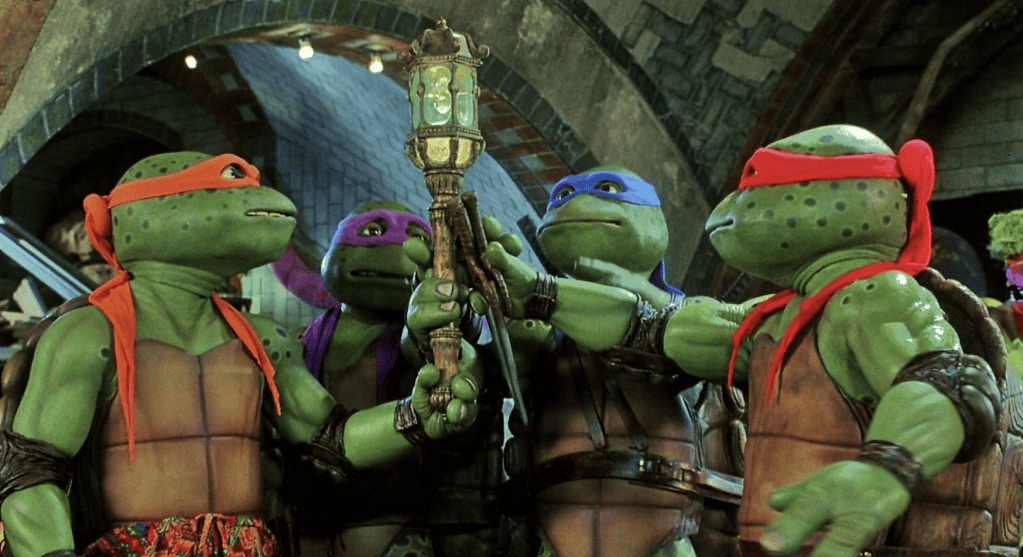
Some of the actors who couldn’t return for the second movie came back for the third. It was great seeing Casey Jones again after his absence from the second movie. Plus, Elias Koteas plays multiple characters fantastically, playing both Casey and his ancestor, Whit. Corey Feldman returns to play Donatello after his absence from the second movie, and it was surprisingly nice to have his voice back. Paige Turco may not have been the first film’s April O’Neil, but she plays her wonderfully and really shines in the third movie. It’s also really cool to see her act with Koteas’ Casey. Stuart Wilson, who plays the movie’s primary antagonist, gives a grounded and serious performance that gives the movie a lot of weight.
It’s also overall a really funny movie. There’s some solid slapstick, and the banter between the Turtles is witty. Every time I watch this flick, there’s always something that makes me chuckle. The dialogue, the slapstick, and the overall wackiness can genuinely be hilarious.
There’s quite a bit of emotion in this third installment as well. The Turtles get to experience what it’s like to be out in public among the humans without being treated like monsters. They’re seen as heroes by the villagers and receive a great deal of respect. It’s actually quite touching. This leads into an emotional and suspenseful ending involving some of the Turtles wanting to stay in the past because they feel like they belong more, which is an interesting topic for the franchise to cover.
Teenage Mutant Ninja Turtles III may not be the best movie in the franchise, but it’s still an absolute blast to watch. It definitely gets way too much hate for what it is.

