
The website known as Rotten Tomatoes has become a bit of a household name. It seems like just about everyone knows about it as if it was Google or Facebook. Rotten Tomatoes is a tool meant to help folks know what others, both audiences and critics, think about movies and TV series. Many deem it to be a helpful tool when deciding what to see at the movie theater, but it’s become a bit of a problem over time.
The way that the review aggregator works is that it takes all reviews on the website for a specific piece of media and presents the average percentage of how many of them were positive versus negative. If 65% of the reviews were positive, it shows that the film or show has a 65% on the page for it.

It doesn’t take into consideration individual scores. If one person were to rank something 5 out of 5 stars while someone ranks it lower at 3 out of 5, then they’re both just added into the positive percentile. If one critic absolutely adores something and gives it the highest possible ranking, it might not matter if others dislike it. The same can be said for the audience score.
It’s also worth noting that the scores listed on the site, for both critics and audiences, only represent a tiny portion of people who have seen the movie or show. A Rotten Tomatoes score is usually based on a few hundred reviews, and sometimes it’s even less than that. 300 people’s opinions don’t feel like a fair representation of the hundreds of millions of potential audience members out there. What I’m pointing out here is that Rotten Tomatoes’ system is rather flawed.
That’s where the big problem with the site comes in. There are a lot of people out there who use this very flawed website to base their own opinions off of. Not only are they basing their opinions on flawed data, but they’re also basing their opinion off of this website instead of thinking for themselves.
People don’t form their own opinion. Instead, they take a look at what a handful of strangers say on a website and decide to adopt that same way of thinking. This is even the case if they haven’t seen the show or movie. If they have seen it, then they look to Rotten Tomatoes for how they should feel about it rather than just liking it or disliking it themselves. Either that, or they hide how they actually feel about it because of what Rotten Tomatoes says. Folks are afraid to say they dislike something that has a high Rotten Tomatoes score, and are especially scared to say they like something Rotten Tomatoes gave a low score to.
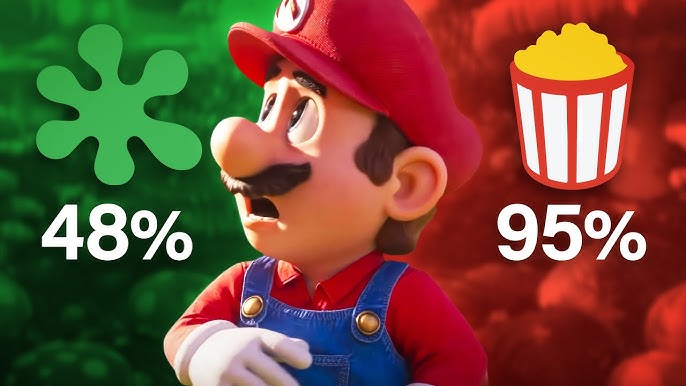
This website, along with the odd way of thinking that it has caused, ruins movies and shows. People now only want to see the movies they’re told to like rather than the ones they want to see. They could be missing out on something they really enjoy just because Rotten Tomatoes rated it lower than average. Also, it’s all made people overly nitpicky when it comes to movies. In their minds, everything is either the best ever or the absolute worst without there being an in-between, which shouldn’t be the case.
This has all led to a certain level of gatekeeping, which we definitely don’t need more of. You’re bullied online for liking something that Rotten Tomatoes deems terrible or disliking something that it deems great.
People need to watch whatever it is they’re interested in and form their own opinion. They shouldn’t be deterred by what others think, especially strangers. They also need to realize it’s okay to like what you like and dislike what you dislike. Art is meant to be subjective, and that includes movies and TV shows.
Rotten Tomatoes may be worth checking after seeing something to compare your own thoughts to others out of curiosity, but your way of thinking shouldn’t be changed by it. The site has caused far too much toxicity within the movie fan community.
Read Next: Keep Buying Physical Media
 Nonstop Nerd